Subject-To Transactions Explained: The Pros, Risks, and What Every Home Seller Should Know
Selling a home isn't always as straightforward as putting it on the market and waiting for a traditional buyer. When mortgage rates are high or financing is difficult to obtain, some buyers turn to creative financing, including what's commonly called a Subject-To Transaction (often referred to as a "subject-to," "wrap," or "seller financing with an existing mortgage").
These transactions can offer real benefits to both buyers and sellers—but they also carry significant financial and legal risks that every homeowner should understand before signing an agreement.
What Is a Subject-To Transaction?
In a subject-to transaction, a buyer purchases a home subject to the seller's existing mortgage. Instead of obtaining a new loan, the buyer agrees to make the payments on the seller's current mortgage while the loan remains in the seller's name.
Sometimes these transactions are structured through a Land Trust or another trust arrangement. While this may provide privacy or organizational benefits, it does not eliminate the underlying responsibilities or risks associated with the original mortgage.
Why Would Someone Use a Subject-To Transaction?
Creative financing has become more common during periods of higher interest rates because it can benefit both parties.
For buyers, it may provide:
- Easier qualification requirements
- Access to lower interest rates on existing mortgages
- Faster closings
- Lower upfront financing costs
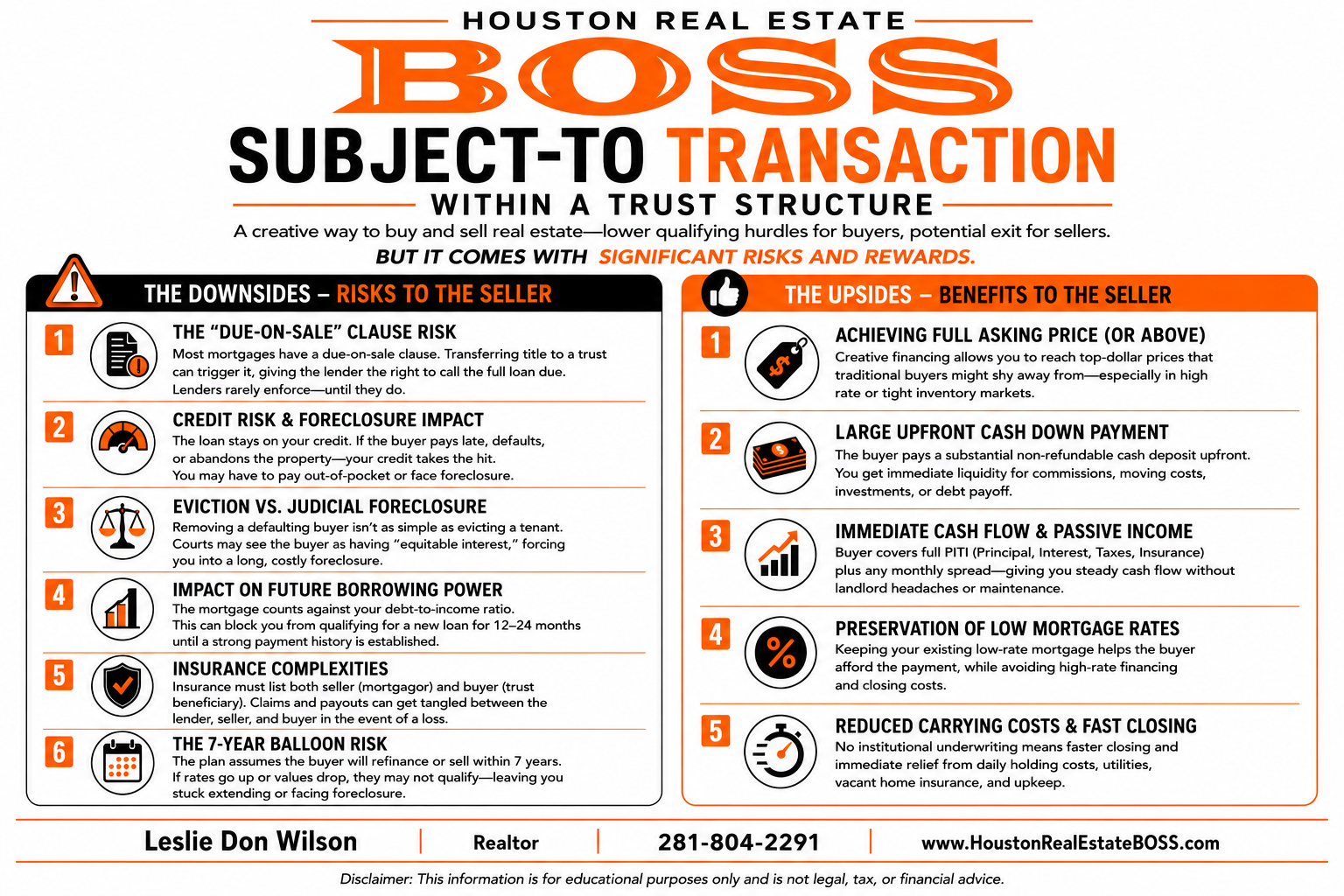
For sellers, it may provide:
- A larger pool of potential buyers
- The opportunity to receive full asking price
- Upfront cash from the buyer
- Monthly cash flow in some situations
- A quicker sale when traditional financing becomes difficult
While these advantages can be appealing, they should always be weighed against the potential risks.
The Biggest Risks for Sellers
1. The Due-on-Sale Clause
Most conventional mortgages contain a Due-on-Sale Clause.
This clause gives the lender the legal right to demand full repayment of the loan if ownership of the property is transferred without the lender's approval.
Although lenders don't always enforce this clause, they generally retain the legal ability to do so.
2. The Mortgage Remains in Your Name
One of the biggest misconceptions is that the seller is "off the hook."
They're not.
Even after the transaction closes:
- The mortgage remains on the seller's credit report.
- The seller remains legally responsible for the loan.
- Late payments can damage the seller's credit.
- A foreclosure would generally affect the seller if the buyer stops making payments.
3. Removing a Defaulting Buyer May Not Be Simple
Many people assume they can simply evict a buyer who stops paying.
In reality, depending on state law and the structure of the agreement, the buyer may have acquired an equitable interest in the property.
That could require a judicial foreclosure or other legal action rather than a standard eviction, making the process longer and more expensive.
4. Future Financing Could Become More Difficult
Since the original mortgage remains on the seller's credit report, it may still count toward the seller's debt-to-income ratio when applying for another mortgage.
Until a lender recognizes a documented payment history made by the buyer (if permitted under underwriting guidelines), qualifying for another home loan could become more challenging.
5. Insurance Can Become Complicated
Insurance policies must accurately reflect the ownership structure.
If a major loss occurs, questions may arise involving:
- The mortgage lender
- The seller
- The buyer
- The trust (if one exists)
Improper insurance coverage can create delays or disputes during a claim.
6. The Balloon Risk
Many creative financing agreements assume the buyer will refinance or sell the property within a certain period.
If interest rates rise or lending standards tighten, refinancing may not be possible when expected.
That could leave everyone facing difficult decisions about extending the agreement, restructuring it, or pursuing legal remedies.
Are There Benefits?
Absolutely.
When structured properly and entered into with a full understanding of the risks, subject-to transactions may provide benefits such as:
- Selling faster
- Receiving a substantial upfront payment
- Achieving a higher sales price
- Creating monthly income
- Allowing buyers to benefit from an existing low-interest mortgage
However, these benefits should never outweigh the importance of understanding the long-term obligations involved.
Should You Consider One?
The answer depends on your individual circumstances.
Every homeowner's financial goals, mortgage terms, tax situation, and legal considerations are different.
Before agreeing to any creative financing arrangement, it's wise to consult qualified professionals, which may include:
- A real estate attorney
- A tax professional
- Your real estate agent
- Other advisors familiar with creative financing transactions
Taking the time to fully understand the agreement can help you avoid costly surprises later.
Final Thoughts
Subject-to transactions are neither inherently good nor inherently bad. They're simply one of many tools that may be available in today's real estate market.
For some sellers, they may provide a practical solution when traditional financing isn't working. For others, the ongoing financial obligations and legal risks may outweigh the potential benefits.
The key is making an informed decision based on a clear understanding of both the opportunities and the responsibilities involved.
Disclaimer: This article is for general educational purposes only and should not be considered legal, tax, financial, or lending advice. Always consult the appropriate licensed professionals before entering into any real estate transaction.